Certified Mold Testing & Independent Mold Inspection
Trusted Local Provider | BBB A+ Rated | 24 Years of Certified Mold Testing
As a certified, independent mold testing and inspection provider, we deliver accurate, lab‑verified results trusted by homeowners, buyers, real estate professionals, and property managers across the Outer Banks and Eastern NC. With 24 years of experience, a BBB A+ rating, and a strict no‑remediation conflict policy, we provide clear, unbiased reporting that helps you make confident decisions about your home or property.
We have provided certified, independent mold testing for Town, County, and State facilities, as well as Federal Government offices that require truly unbiased, third‑party results. These agencies rely on us because we deliver accurate, conflict‑free reporting with the professionalism, documentation, and reliability needed for critical public‑sector environments.
Certified and independent mold testing is essential because it ensures your results are accurate, unbiased, and free from remediation conflicts. Companies that perform both testing and remediation have a financial incentive to find problems, but an independent, certified inspector provides objective, science‑based reporting you can trust. This level of neutrality is critical for homeowners, buyers, real estate professionals, and government agencies who need clear, defensible documentation to make informed decisions.
Our Methods of Mold Testing
Mold testing is essential for identifying the presence and types of mold in a residence or business. Various methods can be used to collect mold samples and analyze them in a laboratory. Here are some common mold testing methods:
- Air Sampling: This method involves collecting air samples to detect mold spores in the indoor environment. Air sampling can help identify the concentration of mold spores and determine if they exceed normal levels.
- Surface Sampling: Surface sampling involves collecting samples from visible mold growth on surfaces using swabs, tape lifts, or bulk samples. These samples are then analyzed to identify the type of mold present.
- Bulk Sampling: Bulk sampling involves collecting pieces of building materials, such as drywall or insulation, that are suspected of having mold growth. These samples are analyzed to determine the type and quantity of mold present.
- Swab Sampling: Swab sampling uses a sterile swab to collect mold samples from surfaces. The swab is then sent to a laboratory for analysis to identify the type of mold.
- Tape Lift Sampling: Tape lift sampling involves pressing a piece of clear tape onto a surface with visible mold growth. The tape is then analyzed in a laboratory to identify the type of mold present.
Each mold testing method has its advantages and disadvantages, and the most appropriate method will depend on the specific situation and goals of the testing. A professional mold inspector can recommend the best type of testing for your needs.
For comprehensive mold testing services, it is essential to use specialized tools and techniques to ensure accurate results and effective remediation.
If you would like your home or office professionally tested for mold, please contact Homeworks Environmental for further information.
Surface Sampling Methods
Surface sampling can be useful for differentiating between mold growth and stains of various kinds. This type of sampling is used to identify the type of mold growth that may be present and help investigate water intrusion. Surface sampling can help the interpretation of building inspections when used correctly. The following are the different types of surface samples that are commonly used to perform a direct examination of a specific location. Spore counts per area are not normally useful.

Tape (or tape-lift)
These samples are collected using clear adhesive tape or adhesive slide for microscopic examination of suspect stains, settled dust and spores. Tape lifts are an excellent, non-destructive method of sampling. The laboratory is usually able to determine if the there is current of former mold growth or if only normally settled spores were sampled.

Bulk
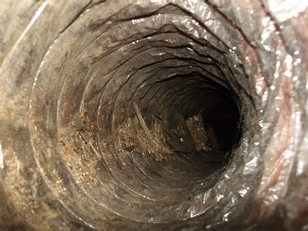
This is a destructive test of materials (e.g., settled dust, sections of wallboard, pieces of duct lining, carpet segments, return-air filters, etc.) to determine if they contain or show mold growth. Bulk sampling collects a portion of material small enough to be transported conveniently and handled easily in the laboratory while still representing the material being sampled. A representative sample is taken from the bulk sample and can be cultured for species identification or analyzed using direct microscopy for genus identification. The laboratory is usually able to determine if the there is current of former mold growth or if only normally settled spores were sampled.

Swab
A sterile cotton or synthetic fiber-tipped swab is used to test an area of suspected mold growth. Samples obtained using this method can be cultured for species identification or analyzed using direct microscopy for genus identification. The laboratory is usually able to determine if there is current of former mold growth or if only normally settled spores were sampled. Identified spores are generally reported as “present/absent”.

Pre-Purchase Mold & Moisture Inspection
With the recent real estate boom and intense bidding competition here in Eastern & Coastal NC, the pressure to close on a property quickly or lose it is very real. Do not invest in a property which may have prior or present moisture damage or potential mold issues. Rushing into a purchase may be an extremely costly financial mistake in the future when issues are identified. One of the most important steps in buying a home is having a home inspection performed. While standard home inspections are useful in identify structural and mechanical damages and concerns, they are not thorough regarding moisture and mold issues. Home inspectors generally see mold as a potential liability and may fail to document questionable concerns. Home Inspectors in general will leave Mold Inspection and Mold Testing services to licensed/certified Mold Inspectors. Call Homeworks Environmental Inspections before you purchase any home in or around Raleigh, North Carolina, for mold and moisture inspections.

Post Remediation Inspection & Testing
In any large mold remediation project HEI recommends Post Remediation / Clearance Testing be performed to ensure that “Elevated” mold conditions have been corrected. A post remediation visual verification inspection should be done to ensure that the work has been performed properly. It is advised to use an independent Certified Mold Testing contractor. Following proper mold remediation guidelines is critical in ensuring that there is no further cross contamination of mold spores mold testing can confirm actual conditions. Our mold inspectors are well experienced and educated and will ensure the proper steps are taken for mold remediation inspection and testing in North Carolina.